Sunday, October 18, 2020

"WHAT ARE YOU DOING IN MY SWAMP!?"

“The Battle of the Swamps” by Muriel Elsie Graham

Across the blinded lowlands the beating rain blows chill,
The trenched earth turns to water, the shell-holes ooze and fill,
A tragic land where little that’s sweet or sane survives –
O hungry swamps of Flanders that swallow up men’s lives!

O numbing nights of Flanders, whose cold breath cannot quench
The grim enduring courage that holds each mud-fouled trench,
That struggles stiffly forward to meet the shattering guns –
O bitter swamps of Flanders that rob us of our sons!

Yet in the sheltered homeland that lies such worlds away,
What shrinking hearts are braving that suffocating clay!
And when on roof and window the rain beats, then – O then,
O deathless swamps of Flanders, our hearts are with our men.


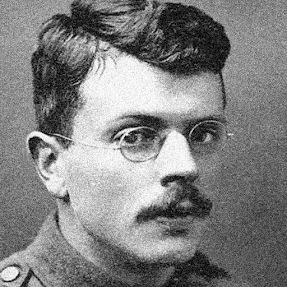
A picture of Muriel Elsie Graham.

Unfortunately for WWI soldiers, they were not Shrek, a semi-friendly, swamp-inhabiting ogre.  Unfortunately for me, Muriel Elsie Graham is a female poet, so not much is known about her. Virtually the only information I can find about Graham is the above picture.* From that photo, that I assume is her but cannot verify, she seems to have been a nurse in the First World War. That would put her near battle, and she certainly would have seen injured men during the war and been familiar with battlefield conditions. Even without knowing much about the author, there are still a few big takeaways from this poem.

The third time I read it, I realized Graham never mentions enemy soldiers like so many other WWI poems. This surprised me, because I automatically used enemy combatants in my first interpretation, but their absence is actually incredibly significant. “The Battle of the Swamps” reads like a description of battle. It talks about “swallowing up men’s lives” and “enduring courage” and “tragic land.” Phrases like that make me think about fighting an enemy, but it’s not the German’s that Graham writes about. It’s the swamps, and by extension. the environmental conditions of the battlefield. She describes “beating rain,” “numbing nights,” and the “mud-fouled trench.” These conditions are the enemy; this is what kills the soldiers.

To emphasize that point, I did some outside research into what battlefield and trench conditions looked like in WWI.  In class, we have talked about flooding trenches and battlefields that were atop swamps, but seeing it strikes a different chord.  I collected some pictures below.

The conditions at Flanders, the location
referenced in the poem.

A man in the trenches.  The man-made holes became
their own swamps.

Soldiers carrying the wounded through mud
at Passchendaele. 

Additionally, here is a link to an interesting article about the conditions at Passchendaele, a battle infamous for its terrible mud. 


Another part of the poem that I would like to highlight is the final stanza, where readers are taken away from the battlefield and to the homeland (probably England). Since this poem is authored by a woman, this change in scenery makes complete sense. Graham says “when on roof and window the rain beats… our hearts are with our men.” I think these two lines are very powerful and express an idea shared by many women: they are suffering through the war too. However, she also captures the nuance of that statement in a previous line when she describes the homeland as “sheltered.” She recognizes that the people at home are not suffering the way soldiers are, but that they aren’t exactly having a grand time either.

The final part of the poem I will touch on is the repeated pattern of the final line of each stanza. “Hungry swamps” that “swallow up men’s lives” is self-explanatory and accurate, but interestingly, it personifies the swamps and makes them feel more like an actual enemy. The second stanza ends with “bitter swamps… that rob us of our sons.” Again this personifies the swamps, almost demonizing them.  Then, it is the last stanza that confuses me.  It says “deathless swamps… our hearts are with our men.” The last words, I talked about previously, but it is the deathless swamps line that really, really confused me.

I think I puzzled it out but would love to hear other perspectives. Deathless means without death, but more specifically means being immortal. Rather than reading that line to mean that no one dies in the swamps, I think this is saying that swamps and the men who died there are an immortal fixture in the hearts and minds of the English at home.

*https://allpoetry.com/Muriel-Elsie-Graham

Saturday, October 10, 2020

Past, Present, and Future: An Analysis of "Ballad of the Three Spectres" by Ivor Gurney

"Ballad of the Three Spectres" by Ivor Gurney

As I went up by Ovillers
In mud and water cold to the knee,
There went three jeering, fleering spectres,
That walked abreast and talked of me.

The first said, ‘Here’s a right brave soldier
That walks the dark unfearingly;
Soon he’ll come back on a fine stretcher,
And laughing for a nice Blighty.’

The second, ‘Read his face, old comrade,
No kind of lucky chance I see;
One day he’ll freeze in mud to the marrow,
Then look his last on Picardie.’

Though bitter the word of these first twain
Curses the third spat venomously;
‘He’ll stay untouched till the war’s last dawning
Then live one hour of agony.’

Liars the first two were. Behold me
At sloping arms by one – two – three;
Waiting the time I shall discover
Whether the third spake verity.


Even before the Great War, Ivor Gurney was not well. He suffered from manic-depression and had experienced a nervous breakdown, but he still went off to fight. Though he survived through the end of the war, in 1922 he was institutionalized before dying 15 years later of tuberculosis. Through it all, Gurney continued to write poetry and compose music, including “Ballad of the Three Spectres.”*

Ivor Gurney

A ballad is a form of poetry that tells a story in a series of stanzas (2 or more) that are able to be put to music and sung. Though this poem was not put to music like some of Gurney’s other works, this piece certainly tells a story.*

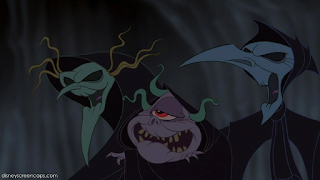
When I first read “The Ballad of the Three Spectres” I thought immediately of three Fates in the Disney movie Hercules.  

The Fates in Hercules who all share a single eye.

Of course, the legend of the Fates did not originate from an animated Disney film but from Greek mythology. According to myth, the Fates (or Moirai) are three female spinners who control the destiny of mortals, spinning the string of each person’s life and cutting it when it is time for them to die. Atropos represents the past, Clotho the present, and Lachesis the future.** A Christmas Carol by Charles Dickens is another famous literary work that tells a story through three mystical beings.

A more traditional interpretation of the three Fates
spinning the yarn of someone's life.

In Gurney’s poem, the idea of the Fates and overall tone seems to suggest a lack of control over one’s own future, and I think he was trying to convey the lack of control soldiers felt about their prospects while fighting in the war.

Diving deeper into the poem reveals more meaning. Starting in the second stanza, each spectre is given its own voice. The first seems to be commending Gurney’s bravery, but likely the spectre actually speaks in a sarcastic tone because of his references to blighty wounds. These were injuries bad enough to get a soldier sent home but not kill or seriously maim.^ Such injuries could be self-inflicted, intentionally done to survive. The spectre is saying that perhaps Gurney will do the cunning and cowardly thing to survive the war.

Then, the second spectre presents an outlook that is even bleaker, suggesting that the author will freeze to death in the mud. In other words, one fate for a soldier is to be a coward and the other is to die. It’s not a great outlook, but there’s still one other possibility. Maybe spectre three has something positive to say?

Actually, the final is the cruelest of them all, saying “‘He’ll stay untouched till the war’s last dawning/Then live one hour of agony.’” This probably refers to a common fear of surviving until the end of the war only to die, slowly, in the final days.^

These statements all relate back to the Fates as the past, present, and future. The first spectre (past) discusses blighty wounds. Gurney was wounded twice in the war, meaning at some point he was taken out of combat before returning. In a sense, blighty wounds are his past. The second Fate (present) talks about the cold and dying while in the trenches. If Gurney wrote this poem while in the trenches, he was talking about a very present fear. The final, however, looks to the future. The war has not yet reached an end. The last stanza provides an open-ended conclusion to the ballad, where Gurney must wait to see if what the third spectre says about the future is true.

In my first reading, before doing prior research, I read the words of the last spectre to have a different meaning than I discussed above. While not as literal, I took the words to mean Gurney could survive the war, only to live the rest of his life tortured by it. I really like this idea because it adds a mystical air to the piece where the spectres prediction does come true. Gurney is haunted by the war, and that combined with his other mental illnesses causes him to be institutionalized.

However you interpret this poem, I think there is an overarching theme that for soldiers there is no good fate in war, not that they really get to control their destiny anyway.


*https://www.poetryfoundation.org/poets/ivor-gurney
**https://www.greekmythology.com/Other_Gods/The_Fates/the_fates.htmlhttps://www.greekmythology.com/Other_Gods/The_Fates/the_fates.html
^https://movehimintothesun.com/2011/04/22/ballad-of-the-three-spectres-ivor-gurney/

Sunday, October 4, 2020

One Day More "Before the Battle:" An Analysis of Martin Armstrong's Poem

Like the musical Les Miserables, “Before the Battle” by Martin Armstrong tells a long story about youth going off to battle and facing death. Armstrong was a soldier in France during the war. He was born in 1882, so he would have been about 33 when he was commissioned. Interestingly, he survived the war by several decades, not dying until 1974.*

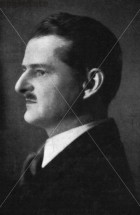
A picture of Martin Armstrong.

When I first read Armstrong’s poem (which you can read here), I thought immediately of the song “One Day More” from Les Mis. Though the musical is set in a different time and conflict, this song sets the same stage as the poem. It describes the time before the battle, men who are really boys are readying themselves to fight and enjoying the last few hours of their life.

“Before the Battle” opens on a somber note, describing the mole-like life soldiers in the trenches live and the dead land that surrounds them. It is gloomy but “memory like the rose” provides an escape. Those memories are of another life these men once led where they frolicked by rivers and enjoyed time with friends. To understand this poem one does not really need to read into the text, however, analyzing the flashback portion of the poem provides a few interesting insights.

First and foremost is the symbolism of water and the river where the men are swimming. One of the first things I learned in English class is that water and rivers are symbolic of life, a connection that highlights the lifelike and vibrant nature of these young men before going into battle. The choice of a river is interesting for another reason though. Here water is indicative of life and a positive element of the memory while at the beginning of the poem (and the end) the trenches are “waterlogged.” In WWI, water flooded trenches and made life miserable for the people in them, so it is important to note the irony that the same thing that made men so happy in one situation makes like miserable in the trenches.

Another repeated element is the willow tree. That took a little more research, but eventually I found that the willow tree, like water, represents life. It also relates to adaptability and survival since willow trees are famously resilient.** They are the epitome of bend don’t break, a necessary quality in a good soldier.

A willow tree by water.  Sometimes these trees are
portrayed as motherly and protective, like in the
Disney film Pocahontas.

Unfortunately, the happy memory in the poem concludes with the bugle calling the men to action where they form orderly rows. The individuality is gone. Bert, who dived into the river in the last stanza is just another member of the party of men. And then the memory is shattered fully when Armstrong tells us that these men “lie in narrow chambers underground.” They are dead.  Just like the opening of this poem reminded me of “One Day More” from Les Miserables, this section reminds me of the song “Empty Chairs at Empty Tables.”

Finally, the poem returns to the miserable setting described in the first stanza, emphasizing the terrible conditions of wet trenches and rainstorms.  Then it concludes with Armstrong asking for another day to enjoy “sun and leaves… and the laughing stream," but all that is only a memory.  Now is the time for battle.

Sunday, September 27, 2020

A Different Wilfred Owen: An Analysis of "Futility"

"Futility" by Wilfred Owen


Move him into the sun—
Gently its touch awoke him once,
At home, whispering of fields half-sown.
Always it woke him, even in France,
Until this morning and this snow.
If anything might rouse him now
The kind old sun will know.

Think how it wakes the seeds—
Woke once the clays of a cold star.
Are limbs, so dear-achieved, are sides
Full-nerved, still warm, too hard to stir?
Was it for this the clay grew tall?
—O what made fatuous sunbeams toil
To break earth's sleep at all?


Wilfred Owen.  What comes to mind when you read his name? If you’re like me, you might think of the grotesque descriptions of war this WWI poet is known for. Think about “Dulce et Decorum Est.” Readers are confronted with startlingly uncensored depictions of war that draw us in and keep us captivated.   Many of his pieces are like watching a car crash, horrible, but how can we look away?

“Futility” is different though. In fact, I had to make sure there wasn’t a misprint when I read that Owen authored this piece. He sounds tired, burnt out, exhausted, and the poem is shorter than many of his other works, a physical representation of that exhaustion perhaps.  "Dulce et Decorum Est," written a year earlier, is more lively, directly questioning a belief held by many people in Britain with dramatically horrifying imagery.  Reading "Futility" almost feels like reading a note someone wrote for himself.  So, I looked at a timeline of Owen’s life, wondering if there is a clear reason for this shift.  There is.

“Futility” was published in The Nation on June 15, 1918 (shown below), one of only a handful of Owen’s poems published during his life.*  Around that time, Wilfred Owen was drafting and redrafting many poems.  He was also being treated for shellshock, what we would call PTSD.  Then, with the now-familiar irony that accompanies WWI events, in the same month this poem was published, the military approved Owen's return to active service.**  I think this piece reflects well what Owen might have been feeling at that moment as he was called back into a war he didn't want to happen.

"Futility" published in The Nation.


“Futility” is an elegy, perhaps not in traditional form, but in the sense that it is written in remembrance of the dead.  The piece opens with soldiers moving a fallen comrade into the sun, hoping (though they know it is futile) that the sun will imbue him with life once again, the way it wakes people from sleep.  Maybe he’s only sleeping, the writer seems to say, even though he knows that isn't the case.

In the second stanza, Owen says that if the sun can give life to plants and put life on a planet that was once a “cold star,” surely it can do the same for a body that is still warm and already formed. When that plea fails, Owen ponders a larger question. “Was it for this the clay grew tall” alludes to the belief some people hold that man was created from clay. But what is the “this?” In my interpretation, it’s not war but death. In other words, was humanity created die? The final lines drive this message home even further: “what made fatuous sunbeams toil/To break Earth’s sleep at all?” If human life is going to end, then why bother to have it at all?  This piece is a break from Owen's other poems that decry war, but it is possible to interpret the "this" as war instead.  Maybe "this" is both war and death.

It wasn't until after I read this whole poem that I looked at the title, and it was like the moment in a movie or book when suddenly everything makes sense.  Futility. Uselessness, pointlessness.   At first, the futility is trying to revive the dead soldier, but the message is larger than that. Owen, shell-shocked, soon to be redeployed, a staunch opponent of war, expresses not the futility of war but the futility of human existence when death is an inescapable reality.

Sunday, September 20, 2020

Even the Dead Have Not Seen the End of War: An Analysis of "Channel Firing" by Thomas Hardy


Channel Firing by Thomas Hardy

That night your great guns, unawares,
Shook all our coffins as we lay,
And broke the chancel window-squares,
We thought it was the Judgment-day

And sat upright. While drearisome
Arose the howl of wakened hounds:
The mouse let fall the altar-crumb,
The worms drew back into the mounds,

The glebe cow drooled. Till God called, “No;
It’s gunnery practice out at sea
Just as before you went below;
The world is as it used to be:

“All nations striving strong to make
Red war yet redder. Mad as hatters
They do no more for Christés sake
Than you who are helpless in such matters.

“That this is not the judgment-hour
For some of them’s a blessed thing,
For if it were they’d have to scour
Hell’s floor for so much threatening....

“Ha, ha. It will be warmer when
I blow the trumpet (if indeed
I ever do; for you are men,
And rest eternal sorely need).”

So down we lay again. “I wonder,
Will the world ever saner be,"
Said one, “than when He sent us under
In our indifferent century!”

And many a skeleton shook his head.
“Instead of preaching forty year,”
My neighbour Parson Thirdly said,
“I wish I had stuck to pipes and beer.”

Again the guns disturbed the hour,
Roaring their readiness to avenge,
As far inland as Stourton Tower,
And Camelot, and starlit Stonehenge.


Woodrow Wilson is famously quoted saying “[t]his is a war to end all wars," a view that is countered by philosopher George Santayana who said, "[o]nly the dead have seen the end of war.”* In "Channel Firing," Thomas Hardy makes the somber assertion that even for the dead, there is no end to war. In many religions, the dead live on in one form or another, sometimes waiting for a final Judgement Day as Christians believe. Even for those who don’t believe in an afterlife, the message of this poem is clear: war was here before us and it will be here long after we are gone.


"Channel Firing" is a conversation between the dead and God and an ironic conversation at that. In the first stanza, the sounds of guns from a training drill awaken the dead in coffins who believe Judgement Day, the prophecized time when God will judge both living and dead, has come. What immediately strikes me about this poem is that these men are not WWI veterans. The author, Thomas Hardy (pictured above) was born in 1840 and would have been over 70 years old when the First World War began.** Unlike poets such as Siegfried Sassoon or Wilfred Owen who were young enough to be soldiers, Hardy was an old man. He was known in the literary world mostly for his prose, including the famous novel Far from the Madding Crowd as well as many others, but he also wrote significant amounts of poetry, including a series of eleven poems influenced by the South African War^.

Hardy had thought and written about war prior to the outbreak of WWI. Perhaps this is why "Channel Firing" is written from the perspective of those who had died in a previous war rather than from the perspective of deceased WWI soldiers as seen in pieces like "In Flanders Fields." In fact, it is possible that it isn't even soldiers conversing with God, but normal civilians.  Hardy does not explicitly say who the dead are, but clearly this poem expresses the sentiments of an older generation who recognizes the infinite futility of war.

It is in the third stanza that a new voice enters, the voice of God. Far from providing comfort, he says, in more words, that Judgement Day has not arrived, rather the sounds of guns firing mean the world is “as it used to be.” As usual, mankind is innovating ways to make wars even worse. Then God laughs, as if he finds a sort of wry amusement at the suffering of humanity, and says it will be better when he blows the trumpet… if he ever does. Blowing the trumpet is yet another reference to Judgement Day; the Bible says trumpets will sound to signal that day’s arrival. Hardy’s depiction of God is a satire that suggests God is tired of human behavior and is content to let humanity continue to destroy itself.

In response to what they have heard, a skeleton ponders aloud if the world will ever become better than when they died, asking “‘will the world ever saner be… than when He sent us under?’” The response from his fellows is a resounding no, and a Parson says “I wish I had stuck to pipes and beer” instead of preaching. If the poem hasn’t already cast a dim view on God and thus Christianity, these lines certainly do. They express a preacher’s disillusionment with his former career and suggest it is futile to preach kindness and other Christian ideals when humans continuously engage in war and other destructive behaviors.

Finally, the final stanza brings the poem back full circle to the idea that war is an endless cycle of vengeance, its occurrence disturbingly predictable. This point is driven home by the simple fact that Hardy wrote this poem in April of 1914.^^ World War One would not break out for another three months.


*Choi, J. (2017, April 06). 'Never think that war ... is not a crime,' and more defining WWI quotes. Retrieved September 20, 2020, from https://www.usatoday.com/story/news/world/2017/04/04/world-war-i-quotes/100031552/

**Channel Firing by Thomas Hardy - Poems | Academy of American Poets. (n.d.). Retrieved September 20, 2020, from https://poets.org/poem/channel-firing

^Millgate, M. (2020, May 29). Thomas Hardy. Retrieved September 20, 2020, from https://www.britannica.com/biography/Thomas-Hardy

^^A Short Analysis of Thomas Hardy's 'Channel Firing'. (2020, August 03). Retrieved September 20, 2020, from https://interestingliterature.com/2016/08/a-short-analysis-of-thomas-hardys-channel-firing/


Cold-Miser and Mud-Miser in The Great War (Final Paper Summary)

If you’ve seen the Christmas special “The Year Without a Santa Claus” or been on social media enough to see the makeup trend, you know that ...